| ⇦ | 
| ⇨ |
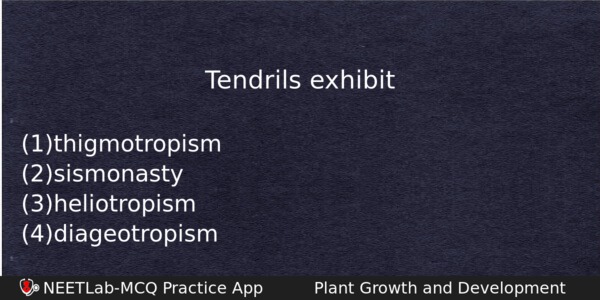
Tendrils exhibit
Options
(a) thigmotropism
(b) sismonasty
(c) heliotropism
(d) diageotropism
Correct Answer:
thigmotropism
Explanation:
Thigmotropism is a directional curvature movement of growth which is produced in response to the stimulus of contact. It is most conspicuous in tendrils which coil around support and helps the plant in climbing. Phototropism is a paratonic directional growth movement of curvature which is induced and determined by the direction of light stimulus. Nastic movements are non-directional movements in which the response is determined by the structure of the responsive organ and not by the direction of the stimulu
Related Questions: - In respiration more than one RQ value results from the use of
- Vascular tissues in flowering plants develop from:
- Hydroponics is
- The cohesive force existing between molecules of water is contributing to
- The membrane surrounding the vacuole is known as
Topics: Plant Growth and Development
(126)
Subject: Biology
(4253)
Important MCQs Based on Medical Entrance Examinations To Improve Your NEET Score
- In respiration more than one RQ value results from the use of
- Vascular tissues in flowering plants develop from:
- Hydroponics is
- The cohesive force existing between molecules of water is contributing to
- The membrane surrounding the vacuole is known as
Topics: Plant Growth and Development (126)
Subject: Biology (4253)
Important MCQs Based on Medical Entrance Examinations To Improve Your NEET Score
18000+ students are using NEETLab to improve their score. What about you?
Solve Previous Year MCQs, Mock Tests, Topicwise Practice Tests, Identify Weak Topics, Formula Flash cards and much more is available in NEETLab Android App to improve your NEET score.

Share this page with your friends
Leave a Reply