| ⇦ | 
| ⇨ |
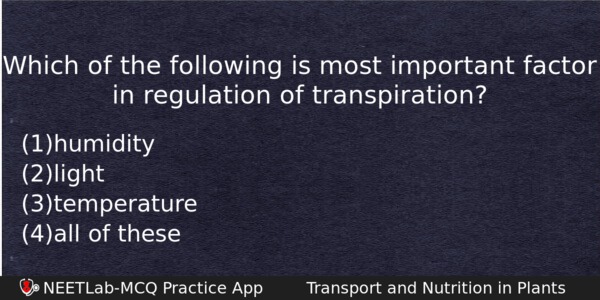
Which of the following is most important factor in regulation of transpiration?
Options
(a) humidity
(b) light
(c) temperature
(d) all of these
Correct Answer:
all of these
Explanation:
A number of external and internal factors influence the rate of transpiration. Among the internal factors are root/shoot ratio, leaf area and leaf structure. External or environmental factors, include
(i) Relative humidity – If R.H. is low then rate of transpiration depends upon difference in vapour pressure or internal atmosphere of leaf and external environment (i.e., V.P gradient) and it is, therefore, that no transpiration occurs when stomata are fully open but relative humidity is 100%.
(ii) Light
Related Questions: - All population in a given physical area are defined as
- Which pigment of the plant takes part in light reaction of photosynthesis
- The ship in which Charles Darwin travelled was
- Quiescent centre is found in root. The concept of quiiescent centre was proposed
- The end product of fermentation are
Topics: Transport and Nutrition in Plants
(163)
Subject: Biology
(4253)
Important MCQs Based on Medical Entrance Examinations To Improve Your NEET Score
- All population in a given physical area are defined as
- Which pigment of the plant takes part in light reaction of photosynthesis
- The ship in which Charles Darwin travelled was
- Quiescent centre is found in root. The concept of quiiescent centre was proposed
- The end product of fermentation are
Topics: Transport and Nutrition in Plants (163)
Subject: Biology (4253)
Important MCQs Based on Medical Entrance Examinations To Improve Your NEET Score
18000+ students are using NEETLab to improve their score. What about you?
Solve Previous Year MCQs, Mock Tests, Topicwise Practice Tests, Identify Weak Topics, Formula Flash cards and much more is available in NEETLab Android App to improve your NEET score.

Share this page with your friends
Leave a Reply