| ⇦ | 
| ⇨ |
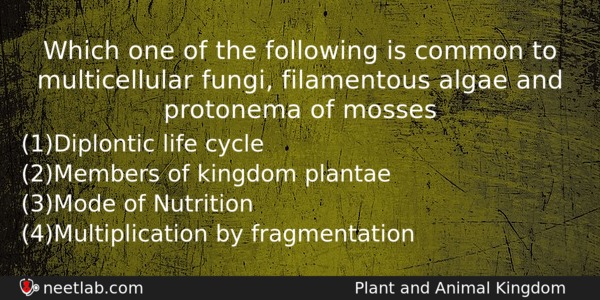
Which one of the following is common to multicellular fungi, filamentous algae and protonema of mosses
Options
(a) Diplontic life cycle
(b) Members of kingdom plantae
(c) Mode of Nutrition
(d) Multiplication by fragmentation
Correct Answer:
Multiplication by fragmentation
Explanation:
Fragmentation or clonal fragmentation in multi cellular or colonial organisms is a form of asexual reproduction or cloning in which an organism is split into fragments. Each of these fragments develop into mature, fully grown individuals that are clones of the original organism.
Related Questions: - Which one of the following also acts as a catalyst in a bacterial cell?
- Filiform apparatus is a characteristic feature of
- The vitamins, which we must daily consume should be
- Photochemical combination of hydrocarbons and nitrogen oxides emitted by automobile
- Cellular respiration starts in
Topics: Plant and Animal Kingdom
(295)
Subject: Biology
(4253)
Important MCQs Based on Medical Entrance Examinations To Improve Your NEET Score
- Which one of the following also acts as a catalyst in a bacterial cell?
- Filiform apparatus is a characteristic feature of
- The vitamins, which we must daily consume should be
- Photochemical combination of hydrocarbons and nitrogen oxides emitted by automobile
- Cellular respiration starts in
Topics: Plant and Animal Kingdom (295)
Subject: Biology (4253)
Important MCQs Based on Medical Entrance Examinations To Improve Your NEET Score
18000+ students are using NEETLab to improve their score. What about you?
Solve Previous Year MCQs, Mock Tests, Topicwise Practice Tests, Identify Weak Topics, Formula Flash cards and much more is available in NEETLab Android App to improve your NEET score.

Share this page with your friends
Leave a Reply