| ⇦ | 
| ⇨ |
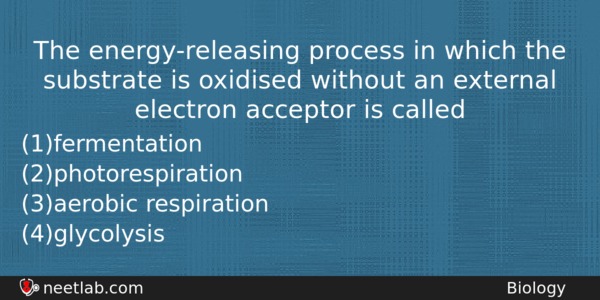
The energy-releasing process in which the substrate is oxidised without an external electron acceptor is called
Options
(a) fermentation
(b) photorespiration
(c) aerobic respiration
(d) glycolysis
Correct Answer:
glycolysis
Explanation:
Glycolysis takes place in all body cells and is of two types-
(a) Anaerobic glycolysis-From glycogen or glucose to lactic acid in muscles.
(b) Anaerobic glycolysis-From glycogen or glucose to pyruvic acid (all cells of body)
Related Questions: - If for some reason the parietal cells of the gut epithelium become partially
- Sewage treatment process in which part of decomposer bacteria is recycled into starting
- The breaking of haemoglobin into heme and globin takes place in
- The matrix of bone and cartilage can be distinguished by the presence of
- The largest subunit of prokaryotic ribosomes is
Question Type: Memory
(964)
Difficulty Level: Easy
(1008)
Topics: Photosynthesis and Plant Growth
(26)
Subject: Biology
(4253)
Important MCQs Based on Medical Entrance Examinations To Improve Your NEET Score
- If for some reason the parietal cells of the gut epithelium become partially
- Sewage treatment process in which part of decomposer bacteria is recycled into starting
- The breaking of haemoglobin into heme and globin takes place in
- The matrix of bone and cartilage can be distinguished by the presence of
- The largest subunit of prokaryotic ribosomes is
Question Type: Memory (964)
Difficulty Level: Easy (1008)
Topics: Photosynthesis and Plant Growth (26)
Subject: Biology (4253)
Important MCQs Based on Medical Entrance Examinations To Improve Your NEET Score
18000+ students are using NEETLab to improve their score. What about you?
Solve Previous Year MCQs, Mock Tests, Topicwise Practice Tests, Identify Weak Topics, Formula Flash cards and much more is available in NEETLab Android App to improve your NEET score.

Share this page with your friends
Leave a Reply