| ⇦ | 
| ⇨ |
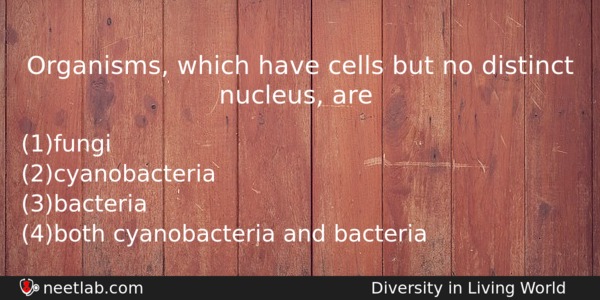
Organisms, which have cells but no distinct nucleus, are
Options
(a) fungi
(b) cyanobacteria
(c) bacteria
(d) both cyanobacteria and bacteria
Correct Answer:
both cyanobacteria and bacteria
Explanation:
Prokaryotes are cells that have no distinct nucleus. Most prokaryotic organisms are single-celled, such as bacteria and algae.
Related Questions: - Fermentation is
- The lining of intestine and kidneys in humans is
- Atmospheric nitrogen-fixation is carried by
- Bacterial plasmid contains
- The age pyramid with broad base indicates
Topics: Diversity In Living World
(339)
Subject: Biology
(4253)
Important MCQs Based on Medical Entrance Examinations To Improve Your NEET Score
- Fermentation is
- The lining of intestine and kidneys in humans is
- Atmospheric nitrogen-fixation is carried by
- Bacterial plasmid contains
- The age pyramid with broad base indicates
Topics: Diversity In Living World (339)
Subject: Biology (4253)
Important MCQs Based on Medical Entrance Examinations To Improve Your NEET Score
18000+ students are using NEETLab to improve their score. What about you?
Solve Previous Year MCQs, Mock Tests, Topicwise Practice Tests, Identify Weak Topics, Formula Flash cards and much more is available in NEETLab Android App to improve your NEET score.

Share this page with your friends
Leave a Reply