| ⇦ | 
| ⇨ |
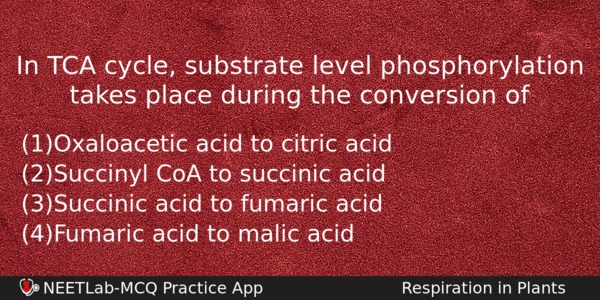
In TCA cycle, substrate level phosphorylation takes place during the conversion of
Options
(a) Oxaloacetic acid to citric acid
(b) Succinyl CoA to succinic acid
(c) Succinic acid to fumaric acid
(d) Fumaric acid to malic acid
Correct Answer:
Succinyl CoA to succinic acid
Explanation:
Succinyl-CoA is acted upon by enzyme succinyl CoA synthetase thiokinase to form succinate (a 4 carbon component). The reaction releases sufficient energy to form ATP (in plants) or GTP (in animals). GTP can form ATP through a coupled reaction.
Related Questions: - The length of DNA molecule greatly exceeds the dimensions of the nucleus
- Which of the following enzymes helps in crossing plasma membrane
- The function of leghaemoglobin in the root nodules of legumes is
- Flagellated male gametes are present in which one of the following sets?
- Mammalian brain differs from an amphibian brain in possessing
Topics: Respiration in Plants
(184)
Subject: Biology
(4253)
Important MCQs Based on Medical Entrance Examinations To Improve Your NEET Score
- The length of DNA molecule greatly exceeds the dimensions of the nucleus
- Which of the following enzymes helps in crossing plasma membrane
- The function of leghaemoglobin in the root nodules of legumes is
- Flagellated male gametes are present in which one of the following sets?
- Mammalian brain differs from an amphibian brain in possessing
Topics: Respiration in Plants (184)
Subject: Biology (4253)
Important MCQs Based on Medical Entrance Examinations To Improve Your NEET Score
18000+ students are using NEETLab to improve their score. What about you?
Solve Previous Year MCQs, Mock Tests, Topicwise Practice Tests, Identify Weak Topics, Formula Flash cards and much more is available in NEETLab Android App to improve your NEET score.

Share this page with your friends
Leave a Reply