| ⇦ | 
| ⇨ |
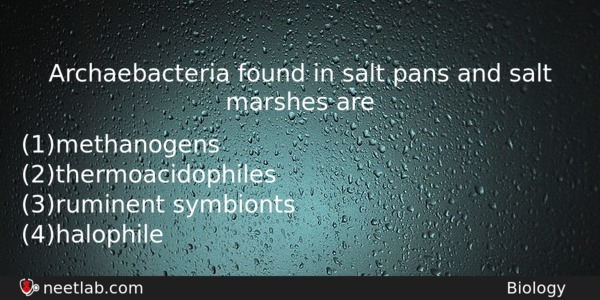
Archaebacteria found in salt pans and salt marshes are
Options
(a) methanogens
(b) thermoacidophiles
(c) ruminent symbionts
(d) halophile
Correct Answer:
halophile
Explanation:
No explanation available. Be the first to write the explanation for this question by commenting below.
Related Questions: - Chitin is a polysaccharide found in the exoskeleton of
- The pH of stomach ranges between
- In animal gametes are derived from
- Origin of first toothed birds took place in
- Natality is balanced by mortality. There will be
Question Type: Memory
(964)
Difficulty Level: Easy
(1008)
Topics: Diversity In Living World
(339)
Subject: Biology
(4253)
Important MCQs Based on Medical Entrance Examinations To Improve Your NEET Score
- Chitin is a polysaccharide found in the exoskeleton of
- The pH of stomach ranges between
- In animal gametes are derived from
- Origin of first toothed birds took place in
- Natality is balanced by mortality. There will be
Question Type: Memory (964)
Difficulty Level: Easy (1008)
Topics: Diversity In Living World (339)
Subject: Biology (4253)
Important MCQs Based on Medical Entrance Examinations To Improve Your NEET Score
18000+ students are using NEETLab to improve their score. What about you?
Solve Previous Year MCQs, Mock Tests, Topicwise Practice Tests, Identify Weak Topics, Formula Flash cards and much more is available in NEETLab Android App to improve your NEET score.

Share this page with your friends
Leave a Reply