| ⇦ | 
| ⇨ |
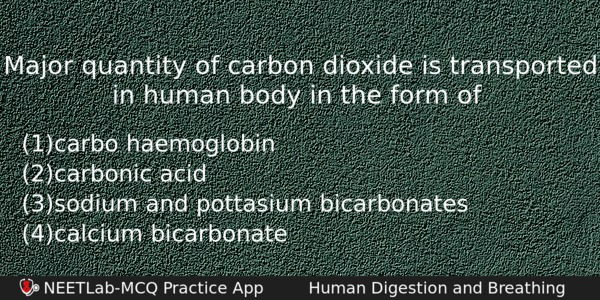
Major quantity of carbon dioxide is transported in human body in the form of
Options
(a) carbo haemoglobin
(b) carbonic acid
(c) sodium and pottasium bicarbonates
(d) calcium bicarbonate
Correct Answer:
sodium and pottasium bicarbonates
Explanation:
About 7% of carbon dioxide transported is dissolved in plasma. About 23% loosely binds with haemoglobin as carbaminohaemoglobin and about 70% reacts with water forming carbonic acid in erythrocytes in the presence of enzyme carbonic anhydrase. Carbonic acid is soon converted into H⁺and HCO₃̄(bicarbonate) ions. This HCO₃̄ion comes out of RBCs and combines with Na⁺and K⁺to form bicarbonates of these ions.
Related Questions: - Artery differs from vein in having
- Apical dominance is not affected by
- A major application of embryo culture is in
- Importance of day length in flowering of plants was first shown in
- The excretory structure of flatworm Taenia are
Topics: Human Digestion and Breathing
(167)
Subject: Biology
(4253)
Important MCQs Based on Medical Entrance Examinations To Improve Your NEET Score
- Artery differs from vein in having
- Apical dominance is not affected by
- A major application of embryo culture is in
- Importance of day length in flowering of plants was first shown in
- The excretory structure of flatworm Taenia are
Topics: Human Digestion and Breathing (167)
Subject: Biology (4253)
Important MCQs Based on Medical Entrance Examinations To Improve Your NEET Score
18000+ students are using NEETLab to improve their score. What about you?
Solve Previous Year MCQs, Mock Tests, Topicwise Practice Tests, Identify Weak Topics, Formula Flash cards and much more is available in NEETLab Android App to improve your NEET score.

Share this page with your friends
Leave a Reply