| ⇦ | 
| ⇨ |
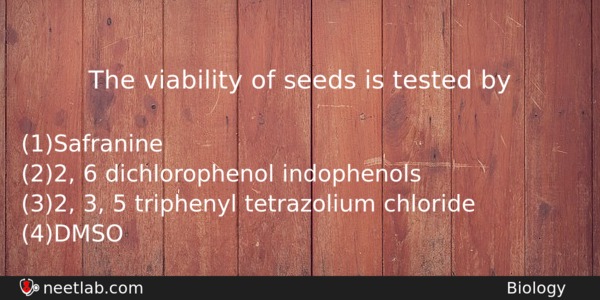
The viability of seeds is tested by
Options
(a) Safranine
(b) 2, 6 dichlorophenol indophenols
(c) 2, 3, 5 triphenyl tetrazolium chloride
(d) DMSO
Correct Answer:
2, 3, 5 triphenyl tetrazolium chloride
Explanation:
Dehydrogenase enzyms present in living tissue reduce the tetrazolium chloride to formazan, a reddish, water insoluble compound. This reaction occurs in or near living cells which are releasing hydrogen in respiration processes. Viable tissues produce a normal red-colour, weak living tissue produce an abnormal colour. Dead tissues do not stain, remaining usually white.
Related Questions: - Which of the following is wrong about Chara?
- In angiosperms, the endosperm is
- In which one of the following pollination is autogamous?
- Colour of urine is yellow due to the pigment
- Which of the following show higher rate of respiration
Question Type: Memory
(964)
Difficulty Level: Easy
(1008)
Topics: Reproduction In Plants
(48)
Subject: Biology
(4253)
Important MCQs Based on Medical Entrance Examinations To Improve Your NEET Score
- Which of the following is wrong about Chara?
- In angiosperms, the endosperm is
- In which one of the following pollination is autogamous?
- Colour of urine is yellow due to the pigment
- Which of the following show higher rate of respiration
Question Type: Memory (964)
Difficulty Level: Easy (1008)
Topics: Reproduction In Plants (48)
Subject: Biology (4253)
Important MCQs Based on Medical Entrance Examinations To Improve Your NEET Score
18000+ students are using NEETLab to improve their score. What about you?
Solve Previous Year MCQs, Mock Tests, Topicwise Practice Tests, Identify Weak Topics, Formula Flash cards and much more is available in NEETLab Android App to improve your NEET score.

Share this page with your friends
Leave a Reply