| ⇦ | 
| ⇨ |
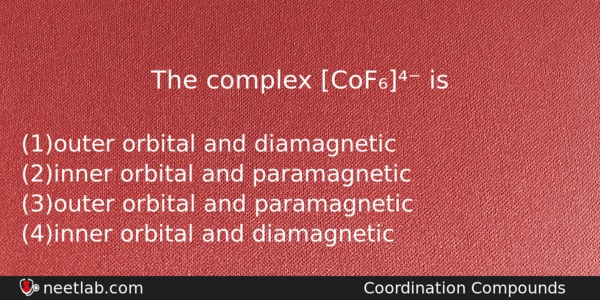
The complex [CoF₆]⁴⁻ is
Options
(a) outer orbital and diamagnetic
(b) inner orbital and paramagnetic
(c) outer orbital and paramagnetic
(d) inner orbital and diamagnetic
Correct Answer:
outer orbital and paramagnetic
Explanation:
Co²⁺ (d⁷) forms an outer orbital and paramagnetic complex due to presence of 3 unpaired electrons.
Related Questions: - Aluminium oxide is not reduced by chemical reaction since
- Which one of the following is not used as a filler in laundry soaps
- Which of the following about fluorine is not correct
- 1 c.c N₂O at NTP contains
- The wrong statements about glycerol is
Topics: Coordination Compounds
(87)
Subject: Chemistry
(2512)
Important MCQs Based on Medical Entrance Examinations To Improve Your NEET Score
- Aluminium oxide is not reduced by chemical reaction since
- Which one of the following is not used as a filler in laundry soaps
- Which of the following about fluorine is not correct
- 1 c.c N₂O at NTP contains
- The wrong statements about glycerol is
Topics: Coordination Compounds (87)
Subject: Chemistry (2512)
Important MCQs Based on Medical Entrance Examinations To Improve Your NEET Score
18000+ students are using NEETLab to improve their score. What about you?
Solve Previous Year MCQs, Mock Tests, Topicwise Practice Tests, Identify Weak Topics, Formula Flash cards and much more is available in NEETLab Android App to improve your NEET score.

Share this page with your friends
Leave a Reply