| ⇦ | 
| ⇨ |
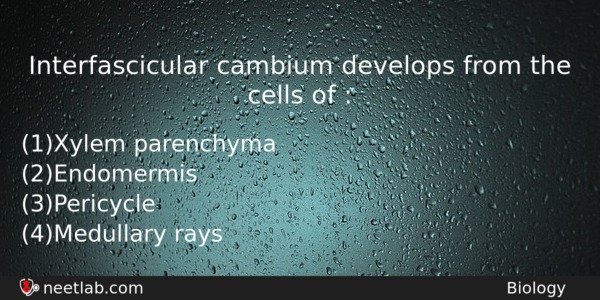
Interfascicular cambium develops from the cells of :
Options
(a) Xylem parenchyma
(b) Endomermis
(c) Pericycle
(d) Medullary rays
Correct Answer:
Medullary rays
Explanation:
At the time of secondary growth interfascicular cambium is formed by parenchymatous medullary rays. Interfascicular cambium along with intrafascicular cambium (formed from cambium cells present between xylem and phloem) constitute continuous cambium ring. If cut off new cells in both directions cause secondary growth in most dicotyledonous plants
Related Questions: - The smallest segment of DNA which helps to detect the presence of a gene or a long
- Crocodile and penguin are similar to whale and dogfish in which one of the
- Which of the following are most suitable indicators of SO2 pollution in the environment?
- Citric acid cycle is also called
- In a food chain, the total amount of living material is depicted by
Question Type: Memory
(964)
Difficulty Level: Easy
(1008)
Topics: Structural Organisation In Plants
(243)
Subject: Biology
(4253)
Important MCQs Based on Medical Entrance Examinations To Improve Your NEET Score
- The smallest segment of DNA which helps to detect the presence of a gene or a long
- Crocodile and penguin are similar to whale and dogfish in which one of the
- Which of the following are most suitable indicators of SO2 pollution in the environment?
- Citric acid cycle is also called
- In a food chain, the total amount of living material is depicted by
Question Type: Memory (964)
Difficulty Level: Easy (1008)
Topics: Structural Organisation In Plants (243)
Subject: Biology (4253)
Important MCQs Based on Medical Entrance Examinations To Improve Your NEET Score
18000+ students are using NEETLab to improve their score. What about you?
Solve Previous Year MCQs, Mock Tests, Topicwise Practice Tests, Identify Weak Topics, Formula Flash cards and much more is available in NEETLab Android App to improve your NEET score.

Share this page with your friends
Leave a Reply