| ⇦ | 
| ⇨ |
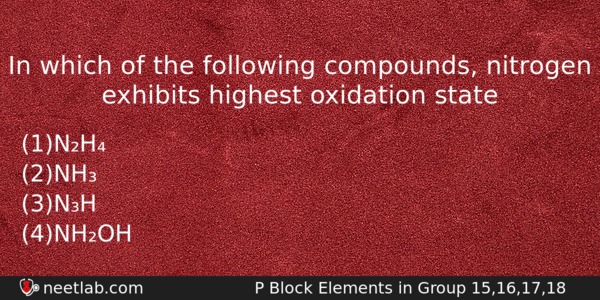
In which of the following compounds, nitrogen exhibits highest oxidation state
Options
(a) N₂H₄
(b) NH₃
(c) N₃H
(d) NH₂OH
Correct Answer:
N₃H
Explanation:
N₂H₄ ⇒ 2x + 4 (+1) = 0 ⇒ 2x + 4 = 0 ⇒ x = x -2. NH₃ ⇒ x + 3 (+1) = 0, ⇒ x = -3. N₃H ⇒ 3x + 1(+1) = 0 ⇒ 3x + 1 = 0. ⇒ x = -1/3. NH₂OH ⇒ x + 2 + 1(-2) + 1 = 0 ⇒ x + 1 = 0. ⇒ x = -1. Thus , highest oxidation state is -1/3.
Related Questions: - Electrophile in the case of chlorination of benzene in the presence of FeCl₃ is
- 0.4g of silver salt of a monobasic organic acid gave 0.26g pure silver on ignition
- Benzaldehyde is different from aliphatic aldehydes in its reaction towards
- D(+)-glucose reacts with hydroxyl amine and yields an oxime.
- Which has the maximum number of molecules among the following
Topics: P Block Elements in Group 15
(89)
Subject: Chemistry
(2512)
Important MCQs Based on Medical Entrance Examinations To Improve Your NEET Score
- Electrophile in the case of chlorination of benzene in the presence of FeCl₃ is
- 0.4g of silver salt of a monobasic organic acid gave 0.26g pure silver on ignition
- Benzaldehyde is different from aliphatic aldehydes in its reaction towards
- D(+)-glucose reacts with hydroxyl amine and yields an oxime.
- Which has the maximum number of molecules among the following
Topics: P Block Elements in Group 15 (89)
Subject: Chemistry (2512)
Important MCQs Based on Medical Entrance Examinations To Improve Your NEET Score
18000+ students are using NEETLab to improve their score. What about you?
Solve Previous Year MCQs, Mock Tests, Topicwise Practice Tests, Identify Weak Topics, Formula Flash cards and much more is available in NEETLab Android App to improve your NEET score.

Share this page with your friends
Leave a Reply