| ⇦ | 
| ⇨ |
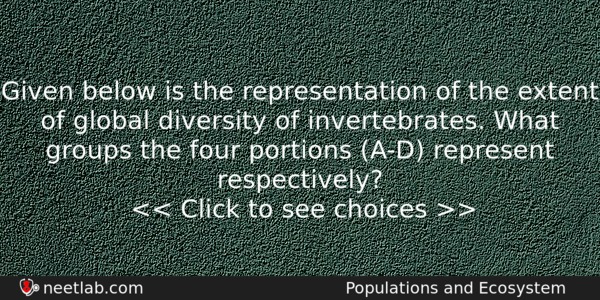
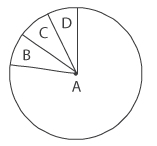
Given below is the representation of the extent of global diversity of invertebrates. What groups the four portions (A-D) represent respectively?
Options
(a) (A)-Insects (B)-Crustaceans (C)-Other animal groups (D)-Molluses
(b) (A)- Crustaceans (B)-Insects (C)-Molluscs (D)-Other animals groups
(c) (A)-Molluscs (B)-Other animals group (C)-Crustaceans (D)-Insects
(d) (A)-Insects (B)-Molluscs (C)-Crustaceans (D)-Other animal groups
Correct Answer:
(A)-Insects (B)-Molluscs (C)-Crustaceans (D)-Other animal groups
Explanation:
No explanation available. Be the first to write the explanation for this question by commenting below.
Related Questions: - If the sequence of bases in DNA is ATTCGATG, then the sequence of bases in its
- AIDS virus causes reduction in
- EMP path is another name of
- Miller and Urey performed an experiment to prove the origin of life. They took
- The plants face wilting due to use of excessive fertilizers because of
Topics: Populations and Ecosystem
(125)
Subject: Biology
(4253)
Important MCQs Based on Medical Entrance Examinations To Improve Your NEET Score
- If the sequence of bases in DNA is ATTCGATG, then the sequence of bases in its
- AIDS virus causes reduction in
- EMP path is another name of
- Miller and Urey performed an experiment to prove the origin of life. They took
- The plants face wilting due to use of excessive fertilizers because of
Topics: Populations and Ecosystem (125)
Subject: Biology (4253)
Important MCQs Based on Medical Entrance Examinations To Improve Your NEET Score
18000+ students are using NEETLab to improve their score. What about you?
Solve Previous Year MCQs, Mock Tests, Topicwise Practice Tests, Identify Weak Topics, Formula Flash cards and much more is available in NEETLab Android App to improve your NEET score.

Share this page with your friends
Leave a Reply