| ⇦ | 
| ⇨ |
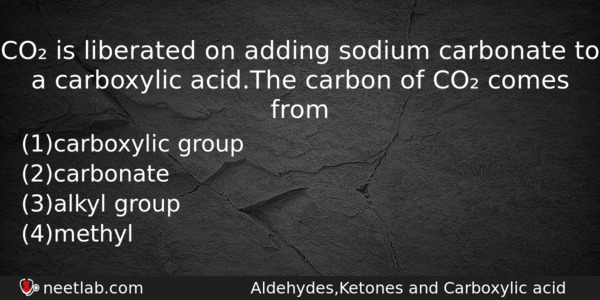
CO₂ is liberated on adding sodium carbonate to a carboxylic acid.The carbon of CO₂ comes from
Options
(a) carboxylic group
(b) carbonate
(c) alkyl group
(d) methyl
Correct Answer:
carbonate
Explanation:
No explanation available. Be the first to write the explanation for this question by commenting below.
Related Questions: - Only sp and sp² hybrid orbitals are involved in the formation of
- Fish die in water bodies polluted by sewage due to
- Which of the following materials is used in high temperature thermometers
- An important product in the ozone depletion by chlorofluorocarbons is
- Which of the following practices will not come under green chemistry
Topics: Aldehydes Ketones and Carboxylic Acid
(89)
Subject: Chemistry
(2512)
Important MCQs Based on Medical Entrance Examinations To Improve Your NEET Score
- Only sp and sp² hybrid orbitals are involved in the formation of
- Fish die in water bodies polluted by sewage due to
- Which of the following materials is used in high temperature thermometers
- An important product in the ozone depletion by chlorofluorocarbons is
- Which of the following practices will not come under green chemistry
Topics: Aldehydes Ketones and Carboxylic Acid (89)
Subject: Chemistry (2512)
Important MCQs Based on Medical Entrance Examinations To Improve Your NEET Score
18000+ students are using NEETLab to improve their score. What about you?
Solve Previous Year MCQs, Mock Tests, Topicwise Practice Tests, Identify Weak Topics, Formula Flash cards and much more is available in NEETLab Android App to improve your NEET score.

Share this page with your friends
Leave a Reply