| ⇦ | 
| ⇨ |
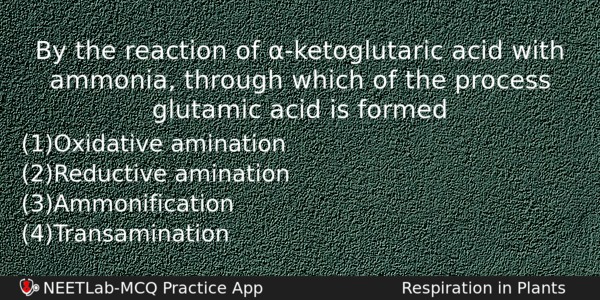
By the reaction of α-ketoglutaric acid with ammonia, through which of the process glutamic acid is formed
Options
(a) Oxidative amination
(b) Reductive amination
(c) Ammonification
(d) Transamination
Correct Answer:
Reductive amination
Explanation:
Reductive amination is the method of amino-acid synthesis in plants. In this method, α-keto glutaric acid reacts with ammonia (NH₃) and forms the amino acid called glutamic acid. The enzyme glutamate dehydrogenase enhances the reaction.
Related Questions: - Which one of the following statements about enzymes is wrong?
- In a forest ecosystem fungi comes under
- Water is mostly absorbed in
- Deciduous forests are characterised by
- The genetic defect-Adenosine deaminase (ADA) deficiency may be cured permanently by:
Topics: Respiration in Plants
(184)
Subject: Biology
(4253)
Important MCQs Based on Medical Entrance Examinations To Improve Your NEET Score
- Which one of the following statements about enzymes is wrong?
- In a forest ecosystem fungi comes under
- Water is mostly absorbed in
- Deciduous forests are characterised by
- The genetic defect-Adenosine deaminase (ADA) deficiency may be cured permanently by:
Topics: Respiration in Plants (184)
Subject: Biology (4253)
Important MCQs Based on Medical Entrance Examinations To Improve Your NEET Score
18000+ students are using NEETLab to improve their score. What about you?
Solve Previous Year MCQs, Mock Tests, Topicwise Practice Tests, Identify Weak Topics, Formula Flash cards and much more is available in NEETLab Android App to improve your NEET score.

Share this page with your friends
Leave a Reply